Forestry Mulching in the Ozarks — Cedar, Brush, and Beyond
Eastern red cedar has been spreading across SW Missouri for decades. What used to be open pasture, productive cedar glades, and quality timber ground is now dense cedar monoculture — and it’s still moving. Ridgeback Land Services uses a high-powered skid steer mulching system to take it back.
Robert Nabb is the operator. He runs the equipment himself on every job. When you hire Ridgeback, you’re working directly with the person behind the controls — not a dispatch coordinator who’s never walked your property.
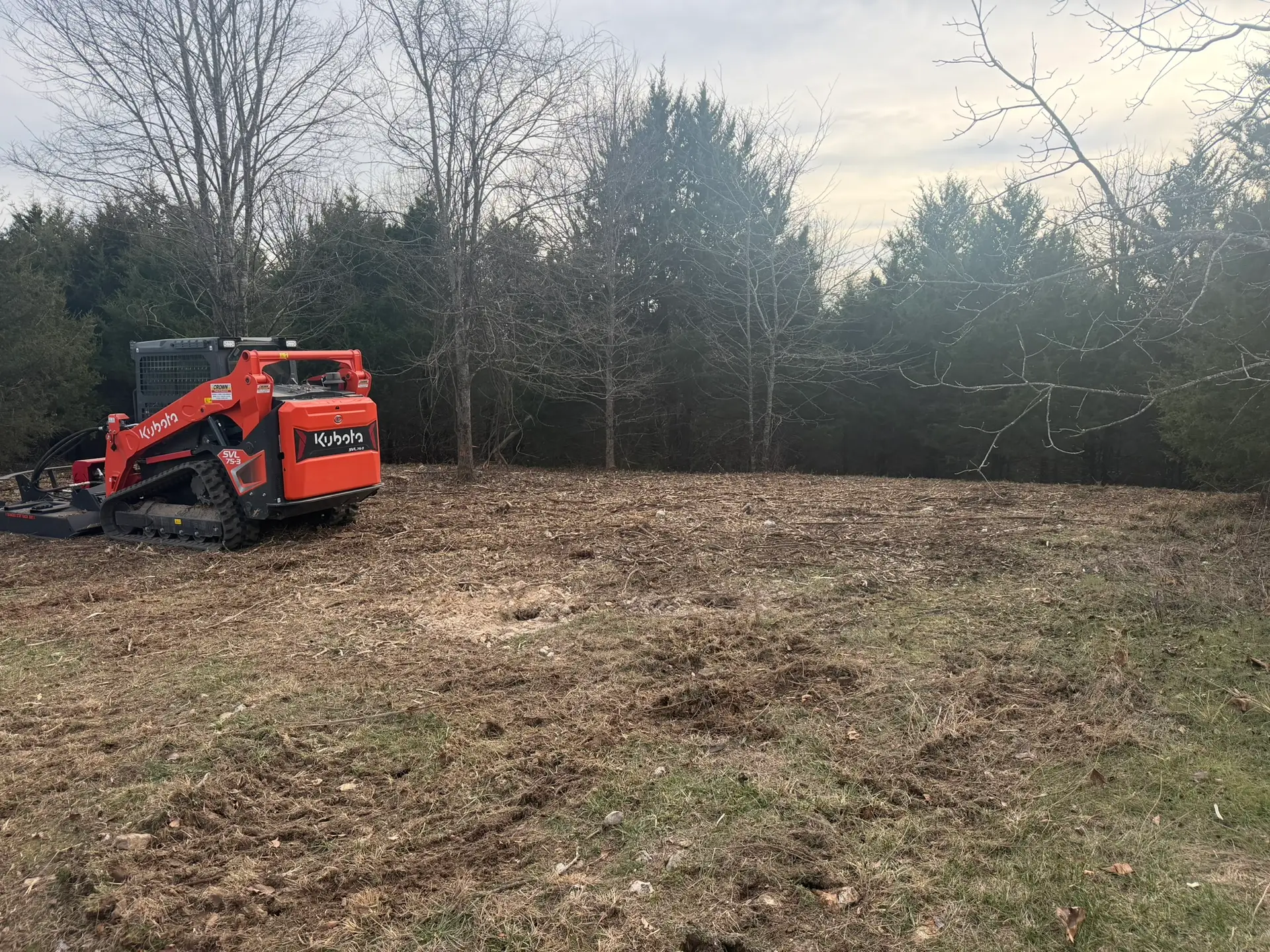
Forestry mulching is a single-pass process
The skid steer’s mulching head grinds everything in its path — cedar, brush, briars, small timber — and leaves a layer of organic mulch behind. Nothing gets piled for burning. Nothing gets hauled away.
That matters a lot in SW Missouri, where burn bans, open burning restrictions near homes and waterways, and the sheer logistics of slash disposal make traditional clearing methods slow and expensive. With forestry mulching, the vegetation is processed right where it stands. You get a clean, walkable property in a single pass — and the mulch breaks down over time, improving the soil instead of leaving bare ground behind.
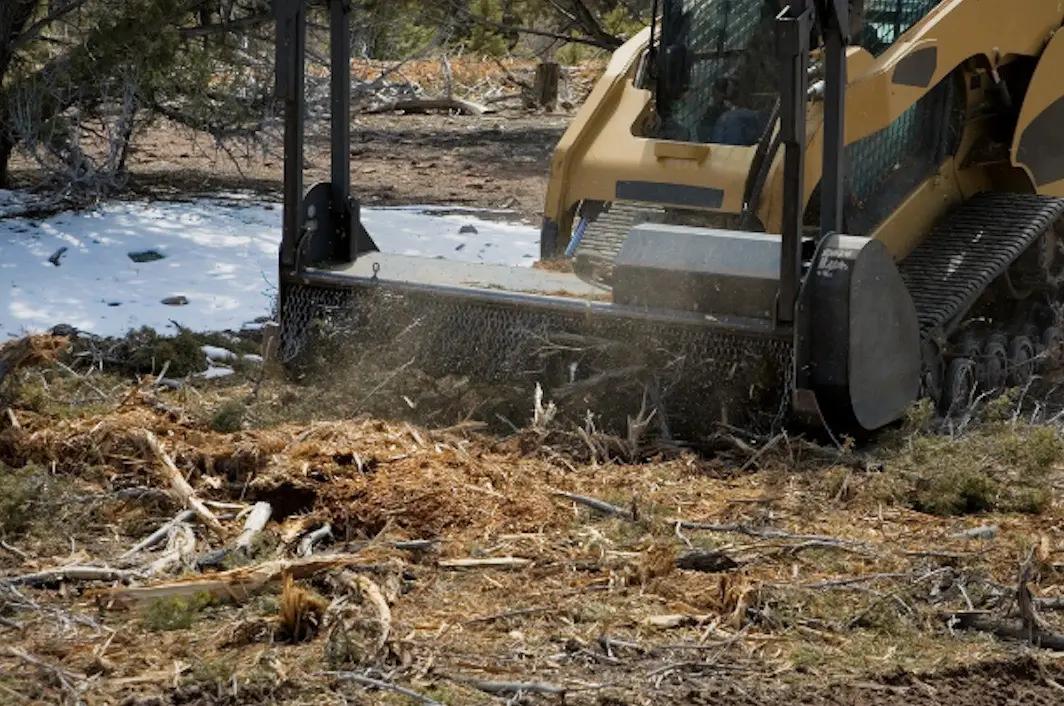
Eastern Red Cedar Is Taking Over SW Missouri
If you own land in Stone County, Barry County, Taney County, or Lawrence County, you’ve probably watched cedar push further into your pastures every year. It doesn’t just shade out grass — it locks up soil moisture, crowds out native plants, and destroys the cedar glade and oak savanna habitats that define this part of the Ozarks.
Ridgeback’s skid steer mulching system handles dense cedar stands efficiently — not just the small trees, but established multi-trunk cedar that’s had years to dig in. After a mulching pass, the ground stays intact. There’s no scraped-bare soil inviting erosion, and no burn scar left from a pile fire that got away from someone on a windy day in November.
Brush, Briars, and the Invasives You're Fighting
Cedar isn’t the only problem. Blackberry thickets, multiflora rose, Japanese honeysuckle, autumn olive, and sumac all compete aggressively for space on Ozarks properties. Left unchecked, they choke out pasture grass, block fence lines, and make land difficult to use or even walk through. Old fence rows of Osage orange (hedge) that have spread out of control are another common job for Ridgeback — especially on agricultural land that’s been out of production for a few years.
The mulching head doesn’t discriminate. Whatever’s overgrown, it handles — from briars to heavy brush lines that have taken over a timber edge. What comes back is a manageable, open property instead of an impenetrable wall of invasives.
How Ridgeback's Skid Steer Mulching System Works
A skid steer mulcher leaves the ground intact in a way that tracked bulldozers and push-clearing equipment simply can’t. There’s no scraping. No grading. No pushing soil off the hillside. The machine rides on top of the ground, and the mulching head processes the vegetation without disturbing the soil structure below.
That makes it the right tool for:
- Properties with rocky, uneven Ozarks terrain and limestone outcrops
- Slopes where exposed soil after clearing would immediately start channeling runoff
- Wetland-adjacent areas along creek bottoms and drainage corridors where sediment disturbance is a concern
- Cedar glade restoration work where the goal is recovery, not total ground disruption
The skid steer is also more maneuverable than larger tracked equipment in tight timber and on irregular terrain — which is the norm in the Ozarks, not the exception.
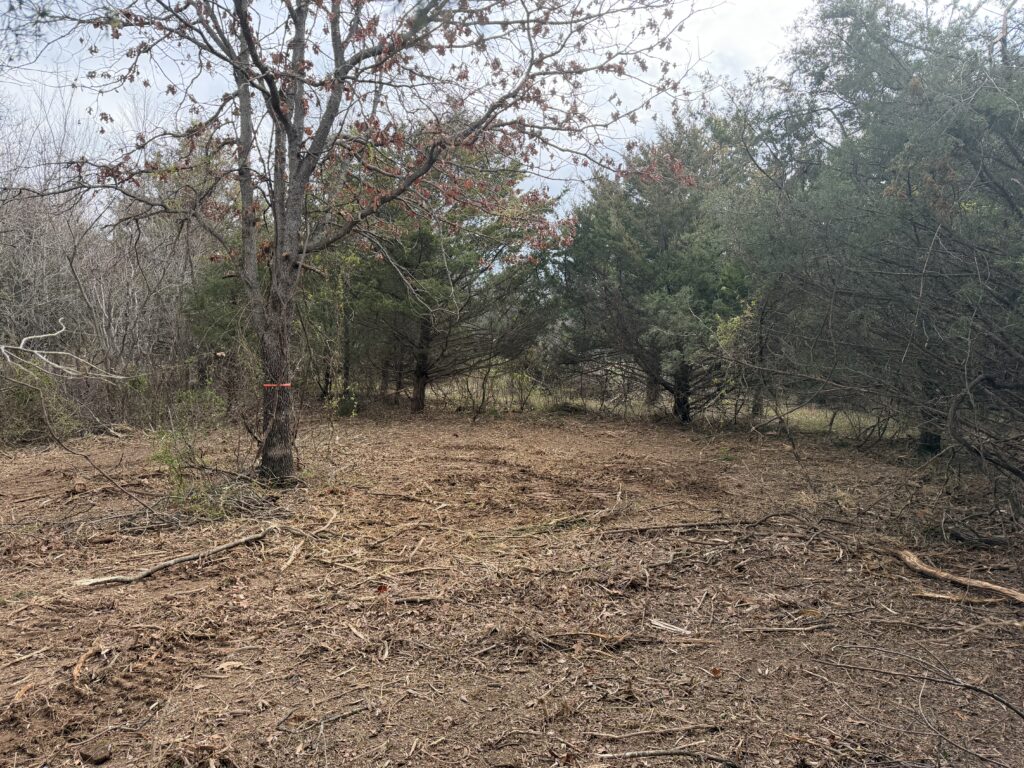
Wetland-Adjacent and Riparian Work
A significant portion of SW Missouri’s acreage sits near rivers, creeks, and seasonal drainages. Properties around Table Rock Lake, the James River watershed, and the Bull Creek corridor often have brush-choked riparian areas that need attention but can’t tolerate heavy equipment tearing up the bank and sending sediment downstream.
Ridgeback’s mulching approach is designed for these situations. No soil is displaced. No sediment gets pushed toward the water. The mulch layer left behind actually helps stabilize the ground during recovery — rather than leaving raw, disturbed soil to wash.
Where We Work
Ridgeback Land Services is based in Galena, MO (Stone County) and serves all of SW Missouri and NW Arkansas.
Missouri
- Stone County
- Barry County
- Taney County
- Christian County
- Lawrence County
- McDonald County
Popular Cities
- Galena
- Branson
- Cassville
- Shell Knob
- Kimberling City
- Reeds Spring
- Crane
- Monett
- Aurora